
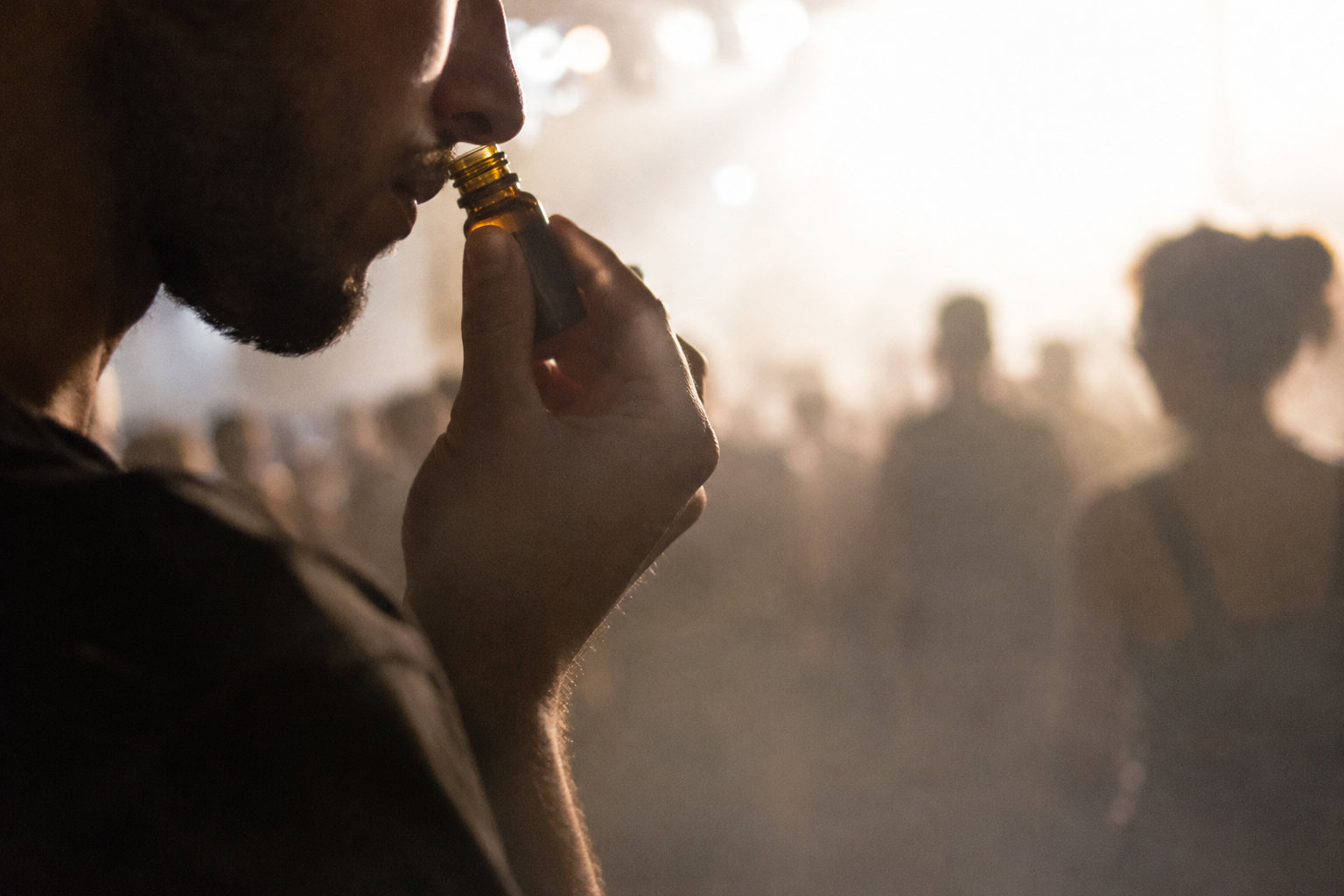
Small bottles sold as room deodorizer are often poppers, and yeah, you can buy them over the counter in the US. Yet federal law bans several of the nitrites inside.
Is that bottle safe to sniff, and is it legal where you live? This article explains what poppers are, how they act on you, the risks, and where US law stands.
What are poppers, exactly?
What alkyl nitrites are
Poppers are liquids that contain volatile alkyl nitrites. Volatile means they evaporate fast at room temperature, so you breathe in the vapor. Common types: amyl, butyl, isobutyl and isopropyl nitrite.
Amyl nitrite is also a prescription medicine, used to ease angina, or chest pain. The poppers bottle is not that medicine, and it has never been evaluated for safe use. Treat it as a risk, not a treatment.
Why they come in small bottles marked as cleaners
Poppers bottles are often labeled as air freshener, liquid incense, deodorizer, leather cleaner, cosmetic, solvent or nail-polish remover. Honestly, that’s a marketing trick. The label is there to sell the bottle, not to tell you how people actually use it.
A “deodorizer” label does not make the liquid safe to inhale or to swallow. Treat any small bottle like this as poppers, whatever the front says.
Poppers hit fast: how they work in your body
Blood vessels relax and blood pressure drops
Inhaled nitrites hit your bloodstream fast, within seconds. They release nitric oxide, which relaxes the smooth muscle in your blood vessel walls. The vessels widen, blood pressure drops, and your heart beats faster.
Dizzy or lightheaded? That’s the pressure drop at work. The exact way it creates the rush is still not fully established, so the buzz tells you nothing about safety. Skip it with heart trouble.
How long the effect lasts
How long the effect lasts
Onset
- Within seconds of inhaling
Duration
- Usually a few minutes
- Then it fades on its own
Chaining hits
- Each hit adds exposure
- It does not make the high last longer
What to do
- Stop at one hit
- Sit down while the effect passes
Why people use poppers and what they feel
Recreational effects reported by users
Most people feel a quick rush, then euphoria and warmth. That warmth comes from the blood vessel widening you just read about, which is why your face and chest flush. Many also report stronger sexual sensations.
Some people sniff them at clubs while dancing for a quick lift. Not worth it: a few minutes of buzz is never worth a blood pressure crash, so skip it on the dance floor.
Use as a sex aid and muscle relaxant
People mostly use poppers in two situations:
- During sex, some people use them to relax smooth muscle, including the anal sphincter, so the sex angle is the one that comes up most.
- Okay, it’s not a mass habit. Only 3.3% of US adults aged 18 to 64 had tried poppers at least once.
- That figure comes from a survey covering 2015 to 2017, so it’s a few years old, but it’s still the best snapshot you’ll find.
Poppers risks you should know before inhaling
Dangerous mixing with erectile dysfunction drugs
Sildenafil and tadalafil, the erectile dysfunction pills, add to the blood-pressure drop that poppers already cause. Together, that drop can get dangerous fast.
Taking one of those pills? Skip poppers completely. Honestly, a quick high isn’t worth fainting on the floor.
Methemoglobinemia and warning signs
Nitrites can cause methemoglobinemia, a change in hemoglobin (the part of red blood cells that carries oxygen) that leaves you with less oxygen, so watch for these warning signs:
- Blue lips or blue skin: never a normal side effect.
- Dizziness or fainting.
- Trouble breathing, a seizure or collapse: call 911 right away, don’t wait.
Eye damage and vision loss
Poppers have been linked to maculopathy, an injury to the central part of the retina that can harm your vision. Inhaling or swallowing them has been linked to hospitalizations and deaths, with breathing trouble, a sharp blood pressure drop, seizures, irregular heartbeat, coma and death.
The US legal status: sold over the counter, but banned
What federal law bans
Sold over the counter doesn’t mean legal. Federal law bans consumer products containing butyl nitrite when they’re inhaled or otherwise put into the body for a high or a physical effect.
The exceptions are narrow: specific commercial uses, and uses approved under federal drug law.
Nobody has checked recreational poppers for safe use, so being on sale tells you nothing about safety. Skip the bottle, no question.
Which nitrites are named
Federal law covers several nitrites, and states can have their own rules, so check yours too.
| Criteria | Butyl nitrites | Volatile alkyl nitrites |
|---|---|---|
| Chemicals covered | n-butyl, isobutyl, sec-butyl and tert-butyl nitrite, plus mixtures | Isopropyl nitrite and similar |
| Products covered | Consumer products for inhalation or euphoric effects | Consumer products for inhalation or other body use, for euphoric or physical effects |
| Ban | Isobutyl banned since 1990 | Took effect 90 days after November 29, 1990 |
Will poppers show up on a drug test?
Why standard screening usually misses them
Most standard drug tests don’t check for alkyl nitrites, so a routine screen usually won’t show poppers, even if you used some recently. Catching them takes a special test that someone has to order on purpose.
If you’re facing a test, tell the person running it what you’ve used so they can check for the right thing. Don’t count on a routine screen to miss it.
When specialized testing can detect them
Your body breaks down inhaled nitrites fast, so even a specialized test can come back clean. A negative result only means the lab found nothing. It doesn’t tell you the product is safe, or that it did no harm to you.
How to cut the risk and react fast if things go wrong
Safer use habits to keep in mind
Don’t inhale or swallow recreational poppers, and never mix them with sildenafil or other erectile dysfunction medicines. Both combinations can drop your blood pressure dangerously.
Got a heart problem or blood pressure issues? Skip them. Don’t chain sniffs either: each extra hit adds exposure, and the rush doesn’t get safer. Honestly, the rush isn’t worth a trip to the ER, so pass on it.
What to do after a bad reaction or swallowing
Feeling off after a hit is no time to wait it out, so here’s the move:
- Call 911 for trouble breathing, a seizure, a collapse or someone who cannot be woken up.
- If someone swallowed poppers, call Poison Control at 1-800-222-1222. It’s free and open 24/7.
- If you feel ill after using them, contact a health care provider promptly.
- Stop using the product and throw away any unused bottle.
Poppers are alkyl nitrites you inhale, and no label makes them safe. The rush comes from a blood pressure drop, and that drop is the real risk. Blue lips, fainting or trouble breathing? Call 911 now.
Your next move is simple: skip the bottle. Heart issues or ED pills? Talk to a health care provider first, because that mix can drop your blood pressure fast.
FAQ
Are poppers addictive?
No, a quick rush and brief effects don’t prove addiction on their own.
Still, if you keep reaching for the bottle or worry about how much you use, talk to a health care professional. Honestly, that’s the smart move, and no judgment comes with it.
What is amyl nitrite used for in medicine?
Prescription amyl nitrite is inhaled to relieve angina, the chest pain that comes when your heart gets less blood than it needs. A doctor has to prescribe it, so it’s not something you grab off a shop shelf.
Where are poppers sold in the US?
You can buy poppers online, in adult novelty stores and in other shops across the US. The bottles often carry labels like air freshener, deodorizer or nail-polish remover, so the front of the bottle won’t tell you what’s inside.